Understanding the cement manufacturing process helps builders, engineers, and homeowners make better quality decisions and choose the right cement for long-lasting structures.
What Is Cement?
Cement is a fine powder that acts as a binder. When mixed with water, sand, and aggregates, it forms concrete or mortar, which hardens over time and gains strength. The quality of cement directly impacts:
-
- Structural strength
-
- Crack resistance
-
- Durability
-
- Surface finish
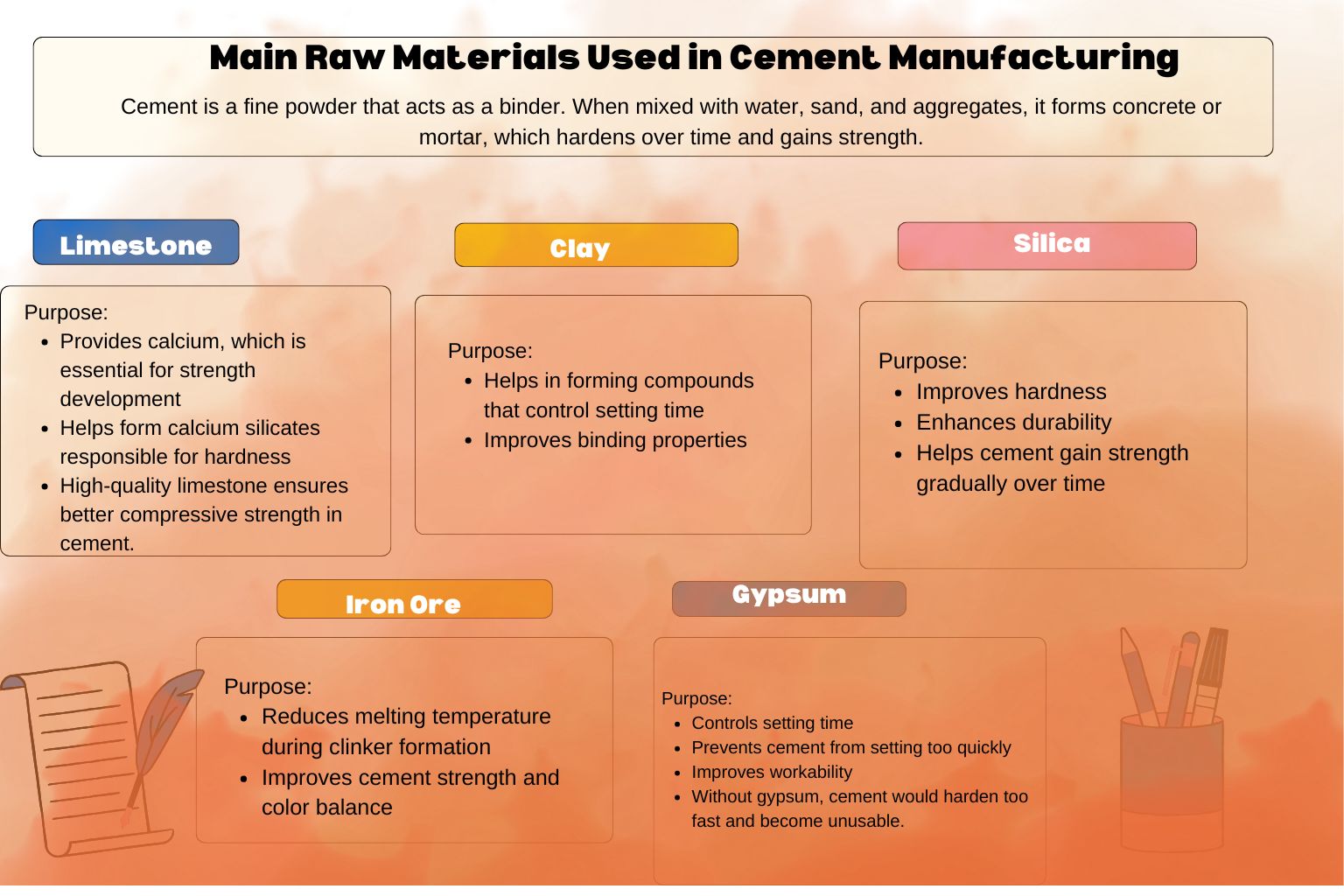
Main Raw Materials Used in Cement Manufacturing
 Limestone (Calcium Carbonate – CaCO₃)
Limestone is the primary raw material used in cement manufacturing.
Purpose:
-
- Provides calcium, which is essential for strength development
-
- Helps form calcium silicates responsible for hardness
High-quality limestone ensures better compressive strength in cement.
 Clay or Shale
Clay supplies silica, alumina, and iron.
Purpose:
-
- Helps in forming compounds that control setting time
-
- Improves binding properties
 Silica (Sand)
Silica plays a key role in strength development.
Purpose:
-
- Improves hardness
-
- Enhances durability
-
- Helps cement gain strength gradually over time
 Iron Ore
Iron acts as a flux.
Purpose:
-
- Reduces melting temperature during clinker formation
-
- Improves cement strength and color balance
 Gypsum
Gypsum is added during the final grinding stage.
Purpose:
-
- Controls setting time
-
- Prevents cement from setting too quickly
-
- Improves workability
Without gypsum, cement would harden too fast and become unusable.
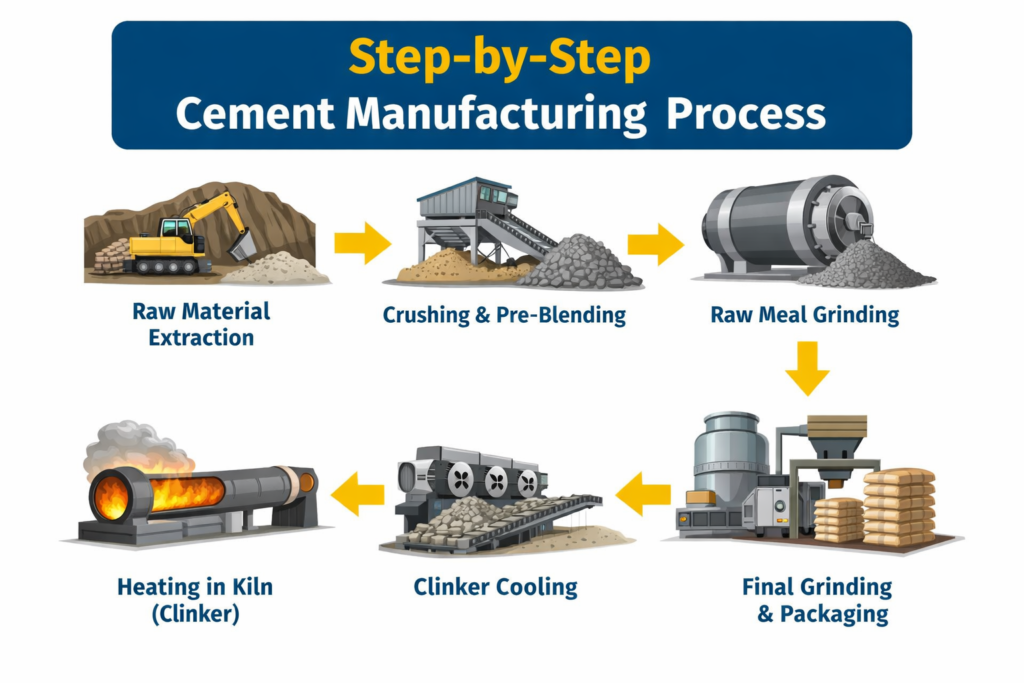
Step-by-Step Cement Manufacturing Process
Step 1: Raw Material Extraction
Limestone, clay, silica, and iron ore are extracted from quarries and mines. Quality control starts at this stage to ensure chemical consistency.
Step 2: Crushing and Pre-Blending
Raw materials are crushed into small particles and mixed in proper proportions. This ensures uniform chemical composition.
Step 3: Raw Meal Grinding
The crushed materials are ground into a fine powder called raw meal. Finer grinding improves chemical reactions during heating.
Step 4: Heating in Rotary Kiln (Clinker Formation)
The raw meal is heated in a rotary kiln at temperatures around 1450°C.
At this stage:
-
- Limestone releases CO₂
-
- Chemical reactions form clinker nodules
Clinker is the heart of cement strength.
Step 5: Cooling the Clinker
Clinker is rapidly cooled to stabilize mineral phases and maintain strength characteristics.
Step 6: Final Grinding with Gypsum
Clinker is ground with gypsum to produce cement powder. Depending on the product, additives like fly ash may be added (for PPC cement).
Purpose of Major Cement Compounds
-
- Tricalcium Silicate (C₃S): Early strength
-
- Dicalcium Silicate (C₂S): Long-term strength
-
- Tricalcium Aluminate (C₃A): Setting time control
-
- Tetracalcium Aluminoferrite (C₄AF): Color and hardness
Balanced composition ensures high strength, low cracks, and durability.
PPC vs OPC – Manufacturing Difference
PPC Cement
-
- Contains clinker + gypsum + fly ash
-
- More eco-friendly
-
- Lower heat of hydration
-
- Better crack resistance
OPC Cement
-
- Higher clinker content
-
- Faster strength gain
-
- Ideal for RCC and foundations
Importance of Quality Control in Cement Manufacturing
Reputed manufacturers follow:
-
- ISI and ISO standards
-
- Continuous lab testing
-
- Controlled raw material proportions
-
- Advanced machinery
Quality-controlled cement ensures safe construction and long life.
Conclusion
Cement manufacturing is a scientific and controlled process where each raw material and step plays a vital role. Understanding this process helps professionals and homeowners choose reliable, high-quality cement for strong and durable structures.
A well-manufactured cement ensures:
-
- Strong foundation
-
- Reduced cracks
-
- Better finish
-
- Long-term safety
- Long-term safety
સિમેન્ટ કેવી રીતે બનાવવામાં આવે છે? કાચા માલ, ઉત્પાદન પ્રક્રિયા અને દરેક ઘટકનું મહત્વ
સિમેન્ટ આધુનિક બાંધકામનો સૌથી મહત્વપૂર્ણ ઘટક છે. ઘર, બિલ્ડિંગ, બ્રિજ કે ઇન્ફ્રાસ્ટ્રક્ચર – દરેક માળખાની મજબૂતી સિમેન્ટ પર આધારિત છે. પરંતુ સિમેન્ટ કેવી રીતે બને છે, કયા કાચા માલથી બને છે, અને દરેક ઘટકનું શું કામ છે – આ જાણકારી ઘણા લોકોને હોતી નથી.
આ પ્રક્રિયાની સમજ હોમ બિલ્ડર્સ, કોન્ટ્રાક્ટર્સ અને એન્જિનિયર્સને સાચી ગુણવત્તાવાળું સિમેન્ટ પસંદ કરવામાં મદદ કરે છે.
સિમેન્ટ શું છે?
સિમેન્ટ એક બાઈન્ડિંગ મટિરિયલ છે. જ્યારે તેને પાણી, રેતી અને એગ્રીગેટ સાથે મિક્સ કરવામાં આવે છે, ત્યારે તે મોર્ટાર અથવા કોન્ક્રિટ બનાવે છે, જે સમય સાથે મજબૂત બને છે.
સિમેન્ટની ગુણવત્તા નીચેના મુદ્દાઓને અસર કરે છે:
-
- માળખાની મજબૂતી
-
- ક્રેક ઓછા થવા
-
- ટકાઉપણું
-
- પ્લાસ્ટરની ફિનિશ
સિમેન્ટ બનાવવામાં ઉપયોગ થતો મુખ્ય કાચો માલ
લાઇમસ્ટોન (ચૂનાનો પથ્થર)
લાઇમસ્ટોન સિમેન્ટનો મુખ્ય કાચો માલ છે.
મહત્વ:
-
- કેલ્શિયમ પૂરો પાડે છે
-
- સિમેન્ટને મજબૂતી આપે છે
માટી (ક્લે / શેલ)
માટી સિલિકા અને એલ્યુમિના પૂરી પાડે છે.
મહત્વ:
-
- સેટિંગ ટાઇમ નિયંત્રિત કરે છે
-
- બાઈન્ડિંગ ક્ષમતા વધારે છે
સિલિકા (રેતી)
સિલિકા મજબૂતી માટે જરૂરી છે.
મહત્વ:
-
- ટકાઉપણું વધારે છે
-
- લાંબા સમયની મજબૂતી આપે છે
આયર્ન ઓર
આયર્ન ફ્લક્સ તરીકે કામ કરે છે.
મહત્વ:
-
- કિલ્નમાં તાપમાન ઘટાડે છે
-
- સિમેન્ટની ગુણવત્તા સુધારે છે
જિપ્સમ
જિપ્સમ અંતિમ સ્ટેજમાં ઉમેરવામાં આવે છે.
મહત્વ:
-
- સેટિંગ ટાઇમ નિયંત્રિત કરે છે
-
- સિમેન્ટને તરત જ સેટ થવાથી બચાવે છે
સિમેન્ટ ઉત્પાદન પ્રક્રિયા (સ્ટેપ બાય સ્ટેપ)
સ્ટેપ 1: કાચા માલનું ખનન
લાઇમસ્ટોન, માટી અને અન્ય ખનિજ ખાણોમાંથી મેળવવામાં આવે છે.
સ્ટેપ 2: ક્રશિંગ અને મિક્સિંગ
કાચા માલને નાના ટુકડામાં તોડી યોગ્ય પ્રમાણમાં મિક્સ કરવામાં આવે છે.
સ્ટેપ 3: ગ્રાઇન્ડિંગ (રૉ મીલ)
મિક્સ થયેલ માલને બારીક પાવડરમાં ફેરવવામાં આવે છે.
સ્ટેપ 4: રોટરી કિલ્નમાં ગરમ કરવું
1450°C તાપમાને કિલ્નમાં ગરમ કરી ક્લિંકર બનાવવામાં આવે છે.
સ્ટેપ 5: ક્લિંકર કૂલિંગ
ક્લિંકરને ઝડપથી ઠંડું કરવામાં આવે છે જેથી મજબૂતી જળવાઈ રહે.
સ્ટેપ 6: અંતિમ ગ્રાઇન્ડિંગ
ક્લિંકર સાથે જિપ્સમ (અને PPC માટે ફ્લાય ઍશ) ઉમેરવામાં આવે છે.
સિમેન્ટના મુખ્ય ઘટકો અને તેમનું કાર્ય
-
- C₃S: શરૂઆતની મજબૂતી
-
- C₂S: લાંબા સમયની મજબૂતી
-
- C₃A: સેટિંગ ટાઇમ
-
- C₄AF: કલર અને ટકાઉપણું
PPC અને OPC સિમેન્ટમાં તફાવત
PPC સિમેન્ટ
-
- પર્યાવરણ માટે અનુકૂળ
-
- ઓછા ક્રેક
-
- પ્લાસ્ટર માટે ઉત્તમ
OPC સિમેન્ટ
-
- ઝડપી મજબૂતી
-
- RCC અને ફાઉન્ડેશન માટે યોગ્ય
ગુણવત્તા નિયંત્રણનું મહત્વ
ISI અને ISO પ્રમાણિત સિમેન્ટમાં:
-
- સતત ટેસ્ટિંગ
-
- નિયંત્રિત પ્રમાણ
-
- આધુનિક ટેક્નોલોજી
આ બધું માળખાની સલામતી સુનિશ્ચિત કરે છે.
નિષ્કર્ષ
સિમેન્ટ ઉત્પાદન એક વૈજ્ઞાનિક પ્રક્રિયા છે, જેમાં દરેક કાચો માલ અને દરેક સ્ટેપ મહત્વ ધરાવે છે. યોગ્ય રીતે બનાવેલું સિમેન્ટ જ મજબૂત, સુરક્ષિત અને ટકાઉ બાંધકામ સુનિશ્ચિત કરી શકે છે.